
Learning how to clean the bathtub takes less time than most people think. A weekly wash takes me about 15 to 20 minutes, and the tub looks new. This guide explains how to clean your bathtub, remove stains, and clear the drain. You will also learn how to prevent mold and keep your tub clean with a simple care schedule.
- What You Need to Clean a Bathtub
- Check Your Bathtub Type First
- How to Clean a Bathtub Step by Step
- How to Remove Bathtub Stains
- How to Clean a Bathtub With Baking Soda or Vinegar
- How to Clean the Bathtub Drain and Remove Hair
- How to Clean a Bathtub Mat
- How to Remove Mold and Mildew From a Bathtub
- How to Disinfect a Bathtub Without Bleach
- How to Keep Your Bathtub Clean Longer
- Bathtub Cleaning Schedule
- Frequently Asked Questions
- Conclusion
What You Need to Clean a Bathtub
Set out everything before you start, so you never leave the job halfway. If you want deep clean your house room by room. Check out this guide.
- A bathtub cleaner or mild dish soap does the main work.
- A soft sponge or cloth wipes the surface without leaving scratches.
- A brush with soft bristles reaches corners and rough, non-slip patches.
- Warm water, from a cup or the shower head, handles every rinse.
- Rubber gloves keep strong cleaners and sticky grime off your hands.
- An old toothbrush cleans tight spots around the drain and faucet.
- A dry cloth finishes the job and stops water spots.
Open a window or turn on the fan before you begin.Never mix bleach with vinegar or ammonia. The mixture can release toxic fumes that damage your lungs. Use one product at a time and rinse the tub between them.
Check Your Bathtub Type First
The wrong cleaner can dull a finish for good, so know your tub type first. Most homes have one of three types, and this chart shows what works.
| Bathtub type | Safe to use | Keep away from |
| Porcelain enamel (steel or cast iron) | Dish soap, baking soda, vinegar, cream cleanser | Steel wool and metal scrapers |
| Acrylic | Dish soap, soft cloth, light baking soda paste | Scouring powder, bleach, rubbing alcohol, rough pads |
| Fiberglass | Dish soap, baking soda paste, gentle bathtub spray | Scouring powder, rough pads, strong solvents |
A magnet sticks to steel and cast iron tubs, but not to acrylic or fiberglass. Tap the side too, because plastic tubs sound dull and metal tubs ring.
How to Clean a Bathtub Step by Step
Complete these six steps one by one to clean your bathtub in about 20 minutes.
Step 1: Remove Items and Rinse the Bathtub
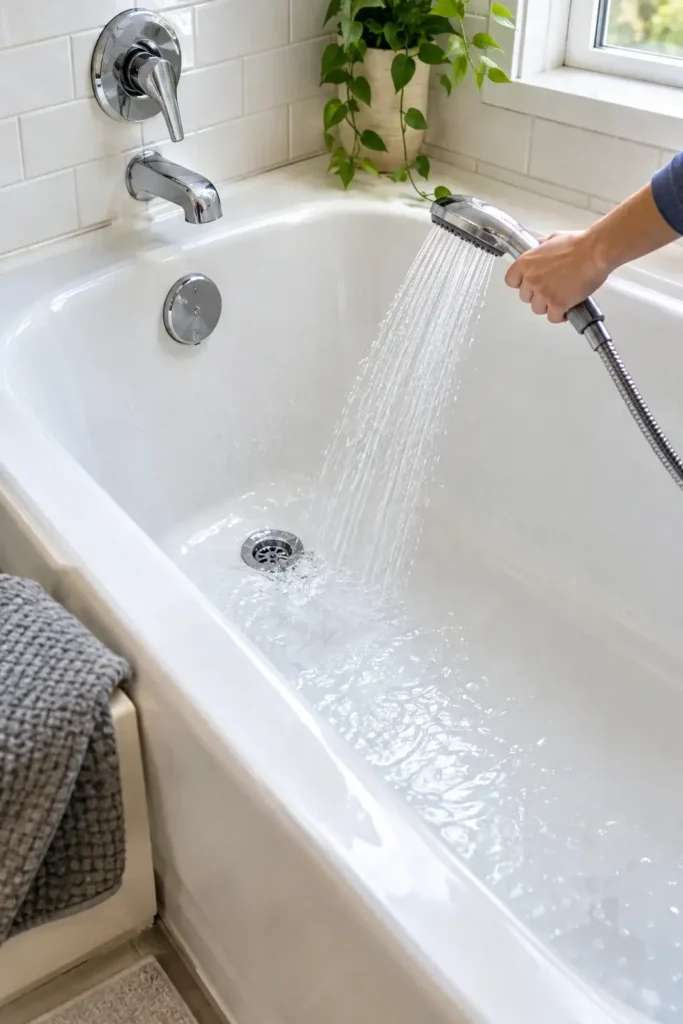
Clear out bottles, razors, toys, and the bath mat before you do anything else. Then spray the walls and floor with warm water to wash off loose hair and dirt. Grit left behind scratches the finish once you start to scrub.
Step 2: Apply Bathtub Cleaner
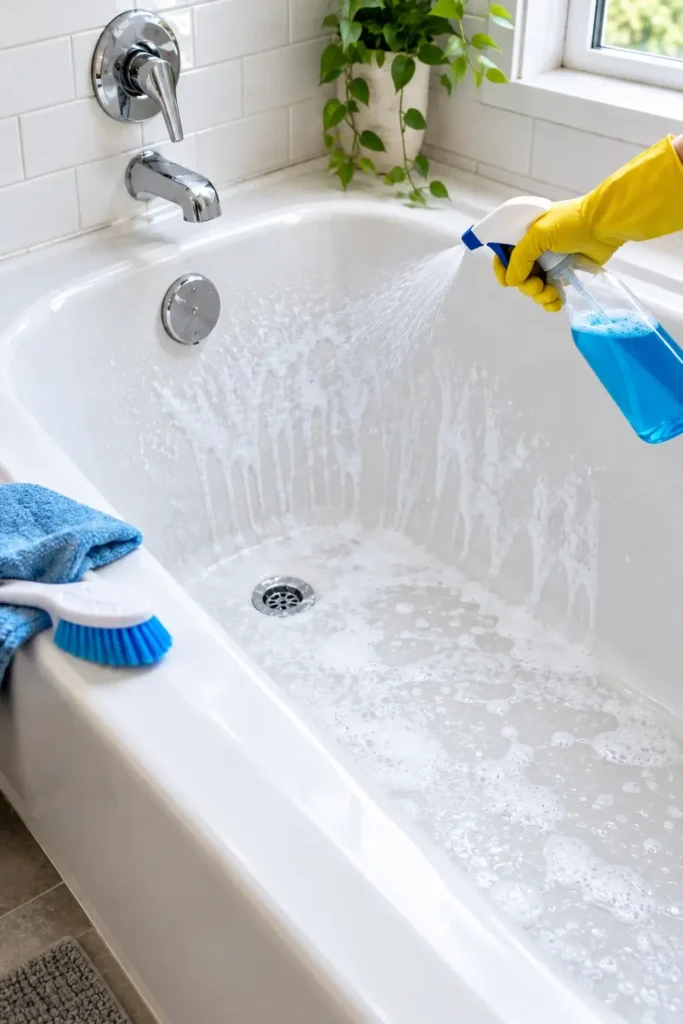
Spray your bathtub cleaner on the walls first, then the floor and faucet. Working top to bottom lets the drips do some of the cleaning for you. If you prefer dish soap, squirt a few drops on a wet sponge and spread it. Do not forget the overflow plate, because grime hides behind it.
Step 3: Let the Cleaner Sit for a Few Minutes
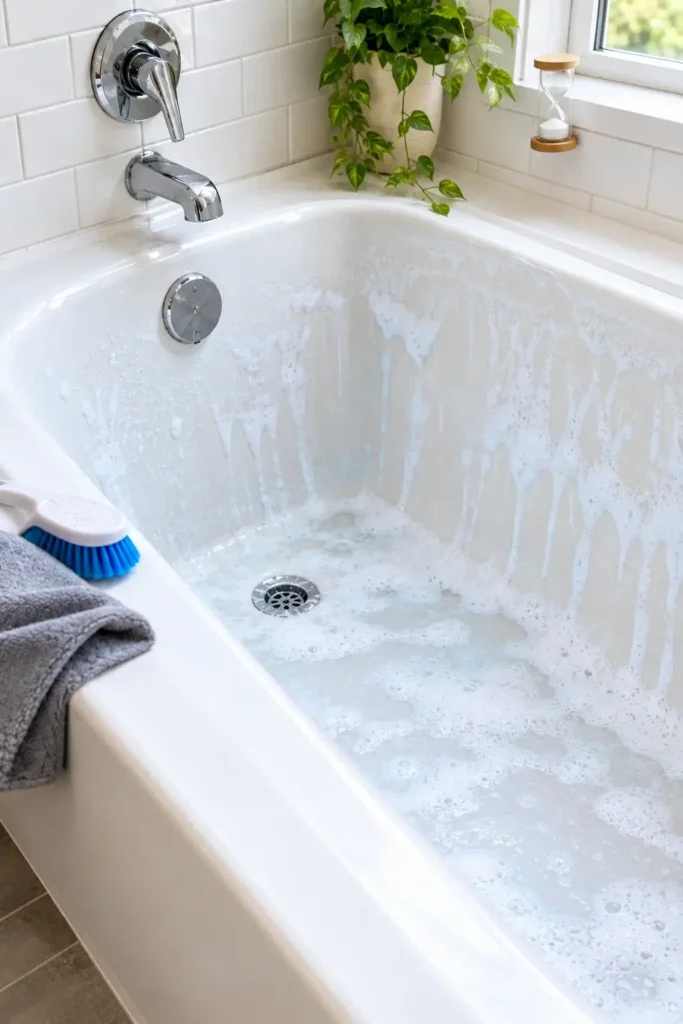
Give the cleaner five to ten minutes to loosen the grime. Most cleaners need a few minutes to work, but the exact time depends on the product. Check the label and rinse the tub before the cleaner dries to prevent streaks. Use this wait time to tidy the sink or wipe the mirror.
Step 4: Scrub the Tub Gently
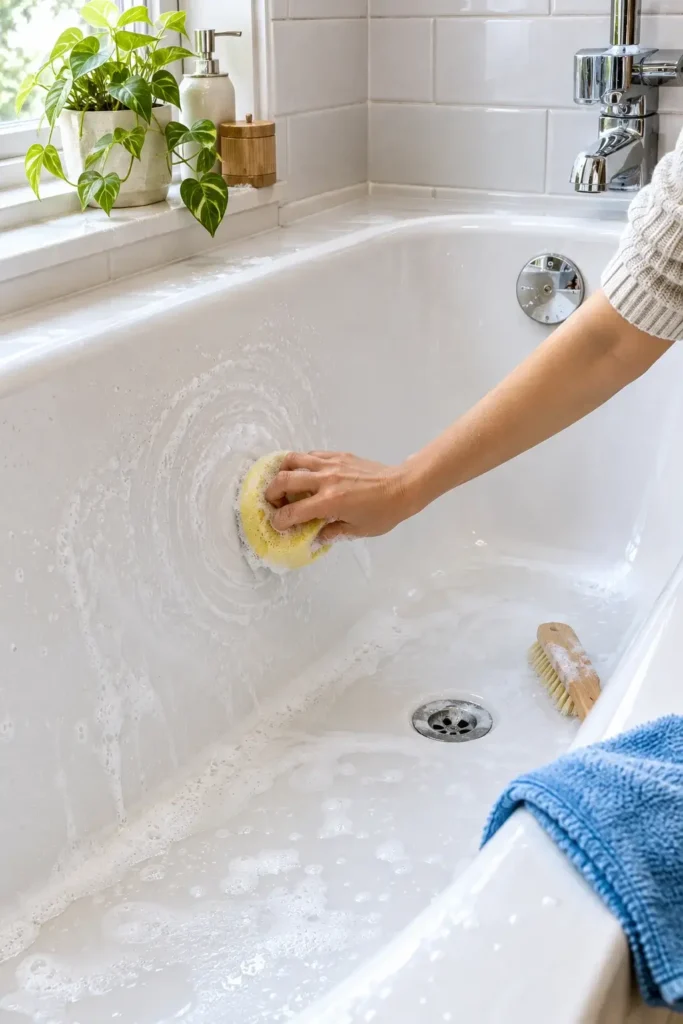
Scrub in small circles with the sponge, moving from the walls down to the floor. Switch to the brush for corners, the drain edge, and any rough spots. Light pressure works best because hard scrubbing slowly wears away the shine.
Step 5: Rinse Away Dirt and Soap
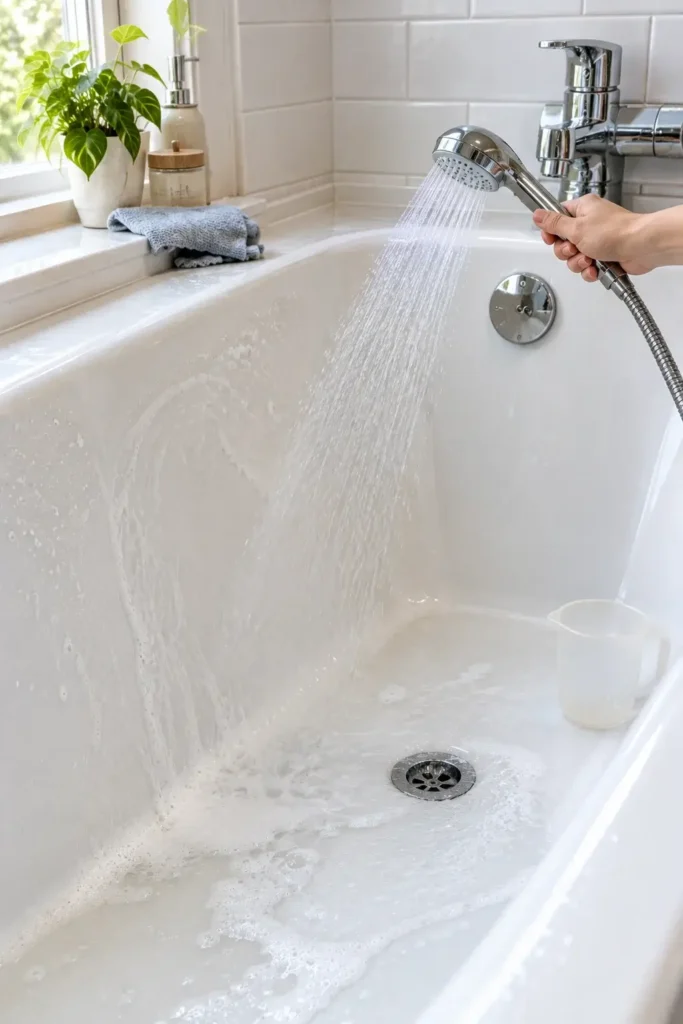
Rinse with warm water until no foam or cleaner stays on the surface. A cup works well for corners, and the shower head handles the walls. Soap residue can leave a cloudy layer on your bathtub and make dirt stick to it.
Step 6: Dry the Bathtub With a Soft, Dry Cloth
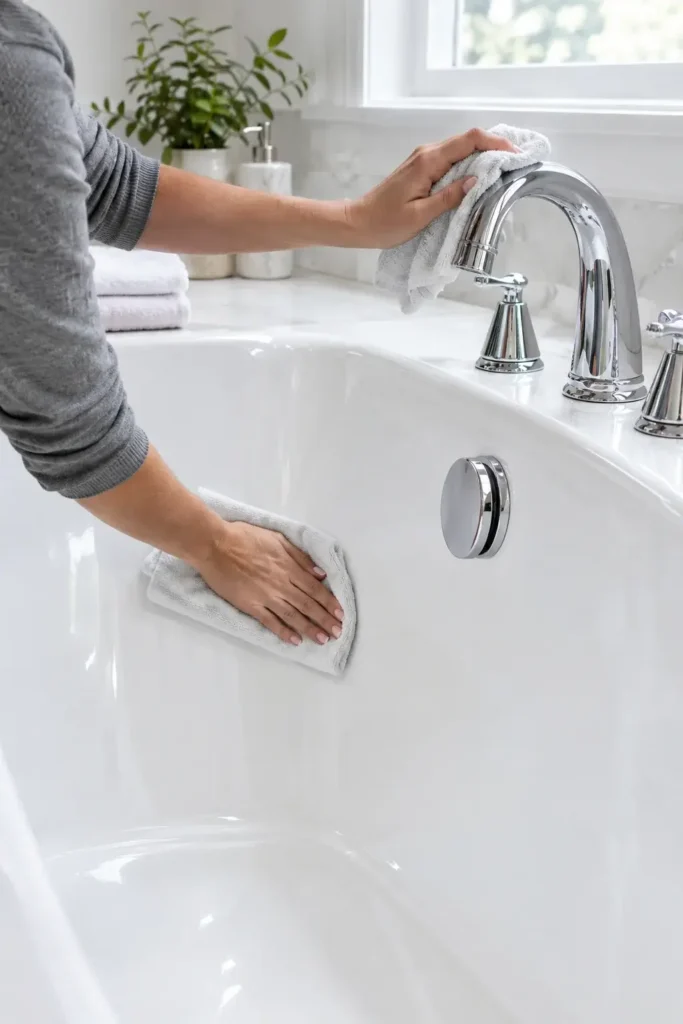
Wipe the surface dry with a clean, soft cloth, including the faucet and handles. A dry tub shines, and water spots have no chance to form. The EPA says mold can grow on damp surfaces within 24 to 48 hours. Dry the bathtub with a clean cloth to remove leftover water and prevent moisture buildup.
How to Remove Bathtub Stains
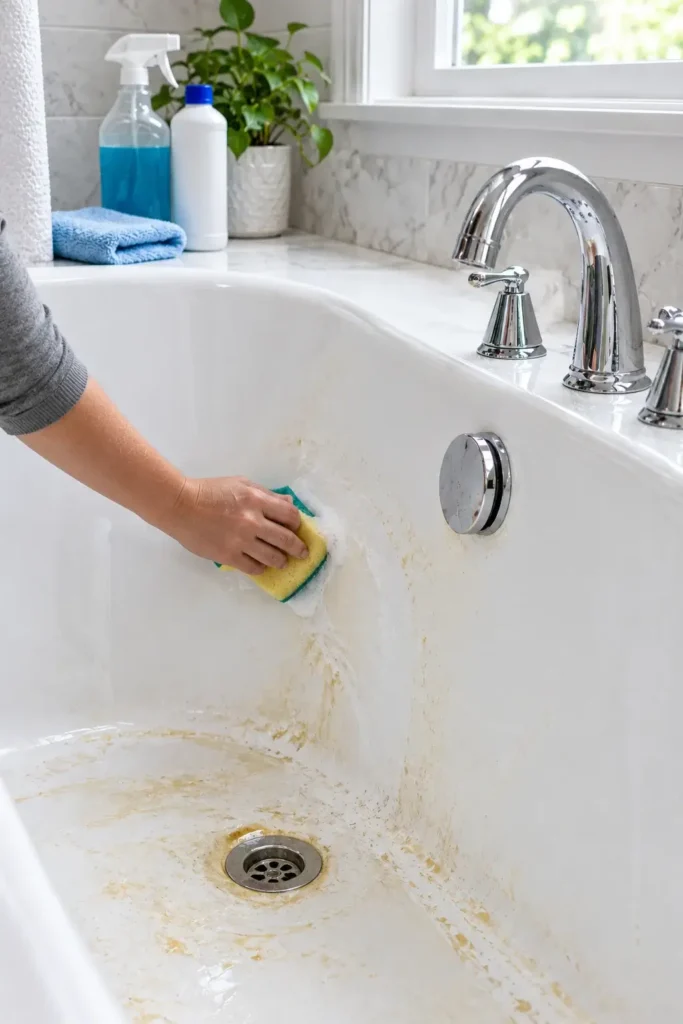
Different stains need different cleaning methods, depending on what caused them.
How to Clean Soap Scum and Hard-Water Marks
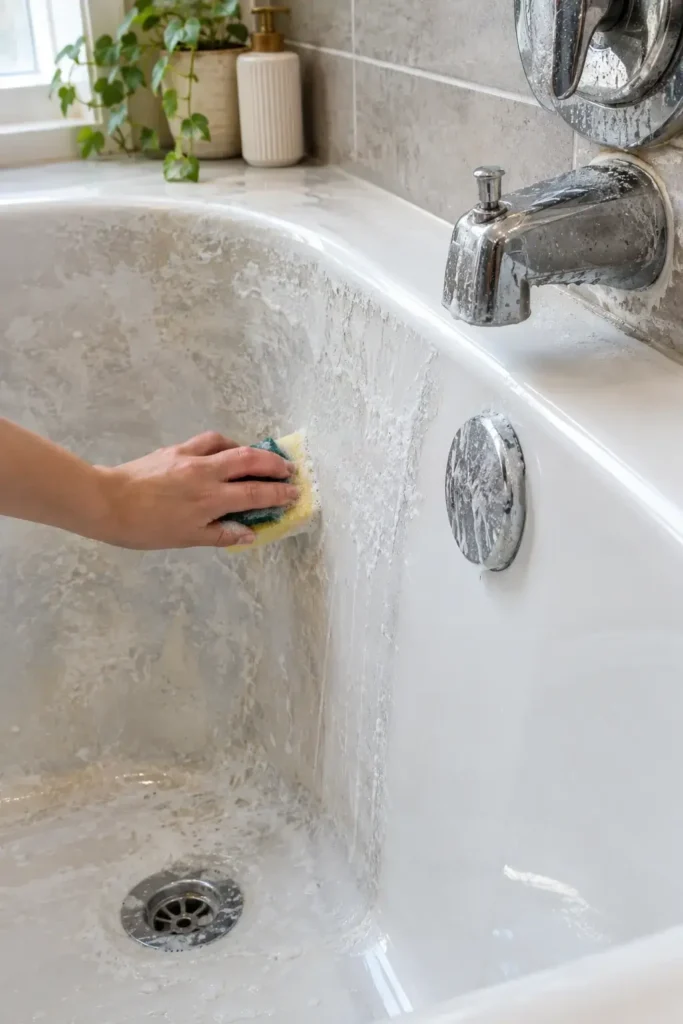
Soap scum builds up when soap mixes with minerals in the water. Hard water contains high levels of minerals that can leave white marks on your bathtub. White vinegar helps loosen these deposits because it contains about 5% acetic acid. Mix it half and half with warm water in a spray bottle. Coat the stained spots with the spray and wait 15 minutes before you scrub. Thick scum needs help, so add a squirt of dish soap to the bottle.
How to clean yellow bathtub stains
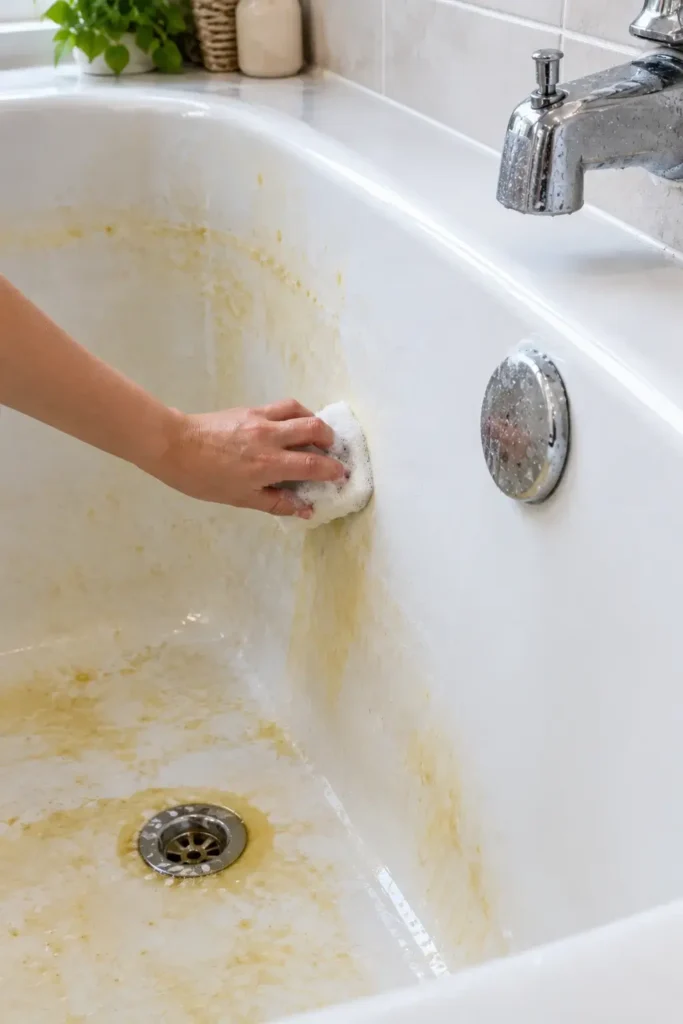
Body oils, rust, and old soap film all turn a tub yellow over time. Baking soda mixed with three percent hydrogen peroxide makes a gentle bleaching paste. Spread the paste over the yellow areas and leave it on for 30 minutes. Scrub lightly, rinse with warm water, and repeat the process if color remains.
Orange rust spots respond to plain lemon juice, which you rub on and rinse after ten minutes. A store rust remover handles heavy stains, so read the label for your tub type. Yellow that never lifts points to an aging finish, and a new coat fixes it.
How to make a bathtub white again
A gray bathtub holds a thin layer of soap film and fine scratches. Start by scrubbing the whole surface with the baking soda and peroxide paste. Rinse it off, then wash with a cream cleanser that suits your tub type. Buff the dry surface with a soft cloth to bring back the gloss. Weekly washing keeps the white from fading, so it beats any big rescue job.
How to Clean a Bathtub With Baking Soda or Vinegar
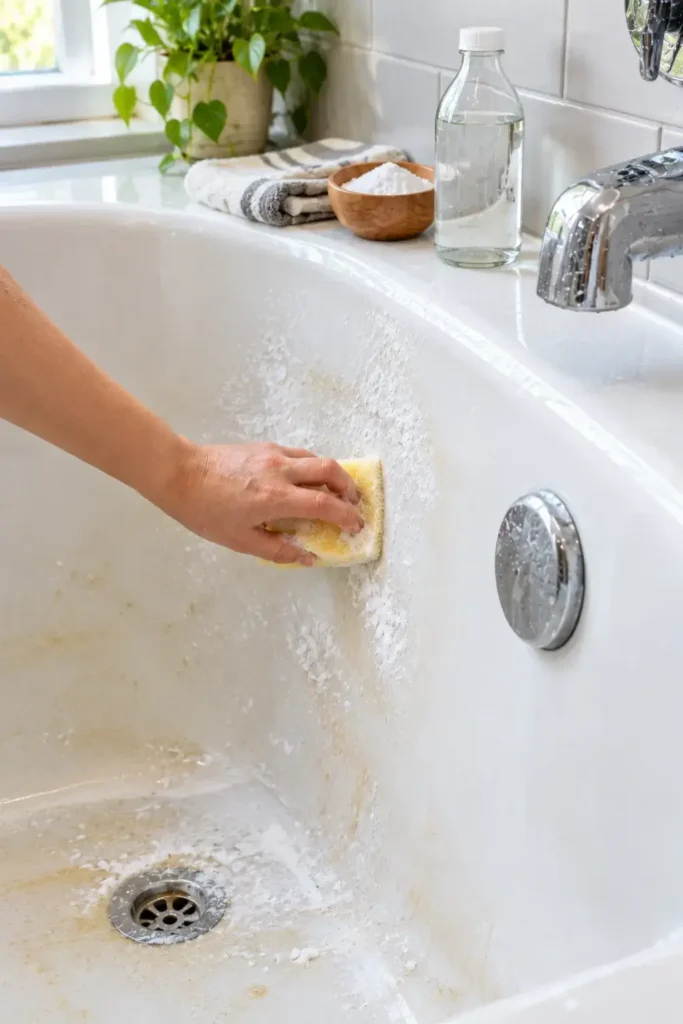
Both of these pantry items work well and cost far less than store brands. On the tub surface, use them one at a time, because mixing them cancels out the cleaning power.
How to clean a bathtub with baking soda
Wet the surface, then sprinkle half a cup of baking soda across the bottom and sides. Rub it in with a damp sponge, giving extra time to stained or greasy areas. The grains act as a mild scrub, so most finishes handle it well. Finish by rinsing until the water runs clear and no white powder remains.
How to clean a bathtub with vinegar
Warm half a cup of white vinegar in the microwave for 30 seconds. Pour it into a spray bottle and add half a cup of dish soap. Shake gently, spray the surfaces, and let the mix work for about 30 minutes. Wipe down the walls and floor, scrub stuck spots, and rinse with plenty of water. This mix is a favorite for a dirty bathtub because it needs very little scrubbing.
How to Clean the Bathtub Drain and Remove Hair
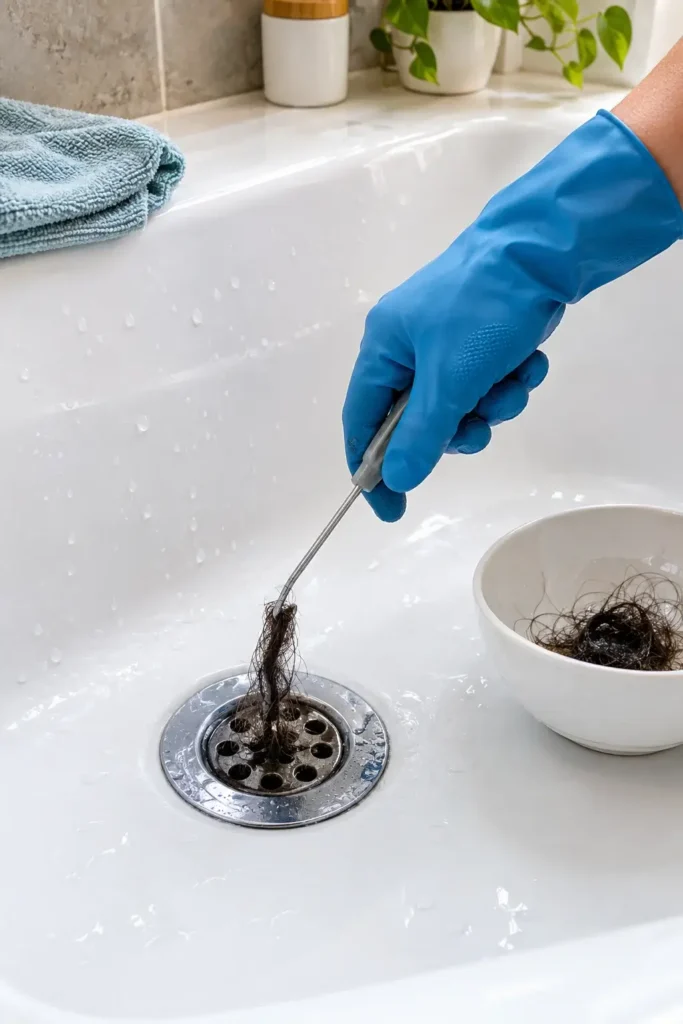
Hair and soap work together to slow your drain over time. Lift out the stopper or strainer and wipe off the slime with a paper towel. A plastic drain snake or a bent wire hanger hooks the hair right out. Put your gloves on for this part, because the hair and slime get messy.
Next, pour half a cup of baking soda down the drain, followed by one cup of vinegar. Let the fizz sit for 15 minutes so it loosens the gunk. Flush the drain with hot water from the tap for a full minute. Scrub the stopper with an old toothbrush before you drop it back in. Remove hair from the drain every two weeks to help prevent clogs.
How to Clean a Bathtub Mat
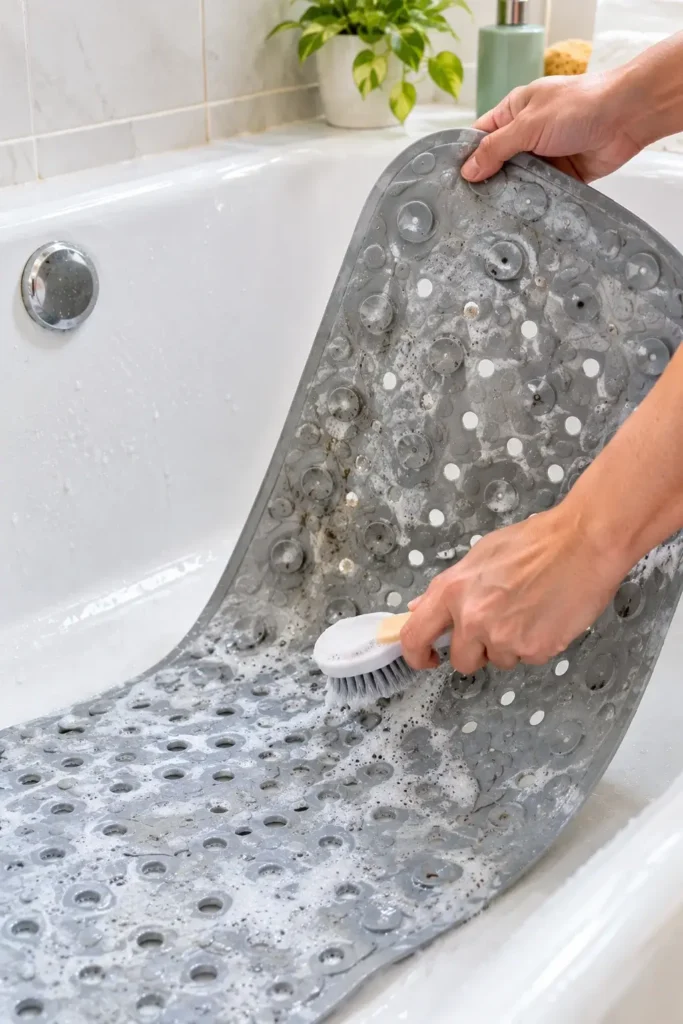
Bath mats hold moisture, soap, and body oils, which can cause mold and mildew to grow underneath. Read the care tag first to find out if the washer is safe. Most mats do fine on a gentle cycle with warm water and a few old towels. Hang the mat to dry, because dryer heat can melt the suction cups.
IIf the label says not to use a washing machine, soak the mat in warm water with one cup of vinegar. Leave it for 30 minutes, then scrub both sides with a brush and rinse well. After each shower, drape the mat over the tub edge so air reaches both sides. Wash it once a week, and replace it when it smells or the rubber cracks.
How to Remove Mold and Mildew From a Bathtub
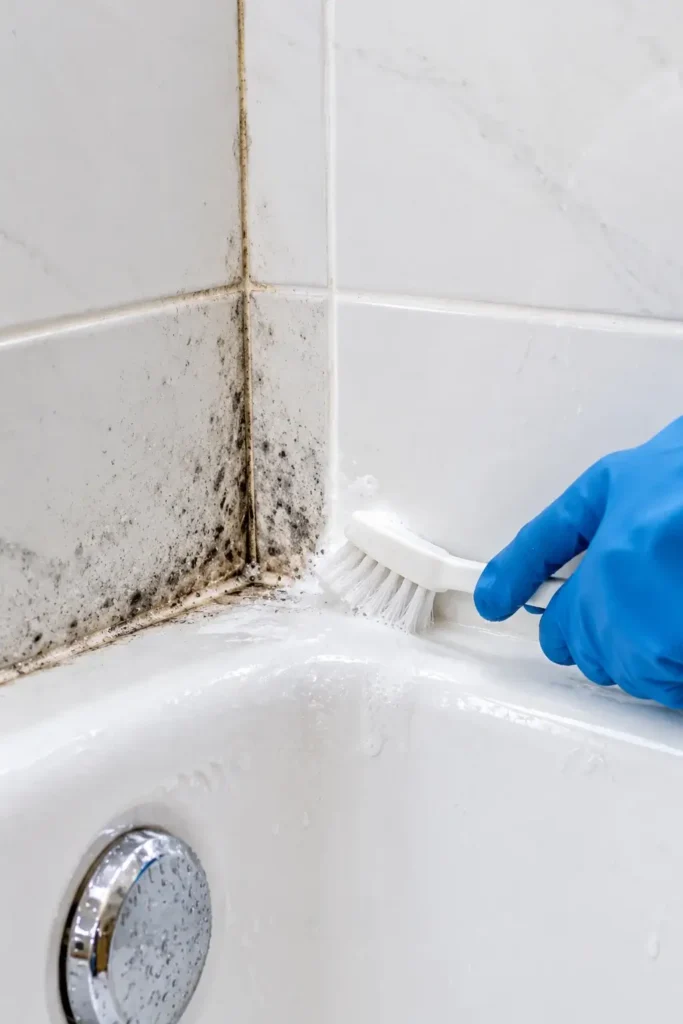
Black or gray spots along the caulk line mean mold has moved in. The EPA says you can handle a moldy patch smaller than ten square feet yourself. Scrub the spots with dish soap and water first, since soap lifts mold off the surface. Next, spray three percent hydrogen peroxide on the area and leave it for ten minutes. Scrub again with a toothbrush, rinse, and dry the spot fully.
Caulk that stays black after cleaning has mold inside, so cut it out and replace it. Let the new caulk cure for the time the tube names before water touches it.
How to Disinfect a Bathtub Without Bleach
Cleaning removes dirt, but you need a suitable disinfectant to kill germs. Vinegar cleans well, yet the EPA does not list it as a germ killer. Wash the surface first, then spray three percent hydrogen peroxide over everything. Let the solution sit for ten minutes, then rinse and dry the tub. Store hydrogen peroxide in a dark bottle because light can break it down.
Rubbing alcohol at 70 percent also works on porcelain, and the surface needs to stay wet for 30 seconds.
How to Keep Your Bathtub Clean Longer
Small habits between cleanings save you a lot of scrubbing later.
- Run warm water over the walls and floor after each bath or shower.
- Pull a squeegee across the walls to stop water spots from forming.
- Leave the bathroom fan on for 20 to 30 minutes after you shower.
- Keep a small spray bottle of water and vinegar beside the bathtub for quick touch-ups.
- Bar soap leaves more scum than liquid body wash, so make the switch.
- Move bottles to a shelf, because wet bottoms leave rings on the floor of the tub.
- Hang loofahs and washcloths to dry instead of leaving them in the bathtub.
Bathtub Cleaning Schedule
Print this chart or save it on your phone to keep the routine on track.
| Task | How often |
| Rinse and wipe the surface | After each use |
| Full wash with bathtub cleaner | Once a week |
| Wash the bath mat | Once a week |
| Clear hair from the drain | Every two weeks |
| Deep clean with baking soda paste | Once a month |
| Check the caulk for mold | Once a month |
Frequently Asked Questions
How often should you clean a bathtub?
A bathtub in daily use needs a full wash once a week. A guest bathtub needs a wash about once a month. A quick rinse after each use makes the weekly job faster. I add a deep clean once a month to catch stains early.
What is the best bathtub cleaner?
The best bathtub cleaner matches your tub type and stays gentle on the finish. Porcelain and cast iron do well with a cream cleanser that has fine grit. For acrylic and fiberglass, pick a gentle spray that lists those tub types on the label. Mild dish soap is the cheapest pick and suits every type.
How can you clean a dirty bathtub without scrubbing?
Let time and a good cleaner do the heavy lifting. Spray your bathtub cleaner over the dry surface and wait a full 30 minutes. Then wipe with a soft sponge and rinse, with no hard scrubbing needed. A weekly habit keeps a dirty bathtub from reaching the stage where scrubbing is the only fix.
Can you use bleach to clean a bathtub?
Yes, you can use bleach on a white porcelain bathtub with care. The CDC suggests one third cup of bleach for each gallon of cool water. Wear gloves, open a window, and follow the sit time on your bottle. Rinse well afterward, and keep bleach far from vinegar and ammonia. Acrylic and colored bathtubs can fade, so use a gentler choice there.
Conclusion
Now you know how to clean the bathtub from start to finish. Start with a quick rinse, apply your cleaner, scrub lightly, and dry the surface. Match each product to your tub type, and stains, scum, and mold stop being a problem.
Small habits like a weekly wash and a dry cloth keep the shine for years. Pick one day this week, set a timer for 20 minutes, and give your bathtub a fresh start. Visit luxehomedecors.com for more home decor tips.